
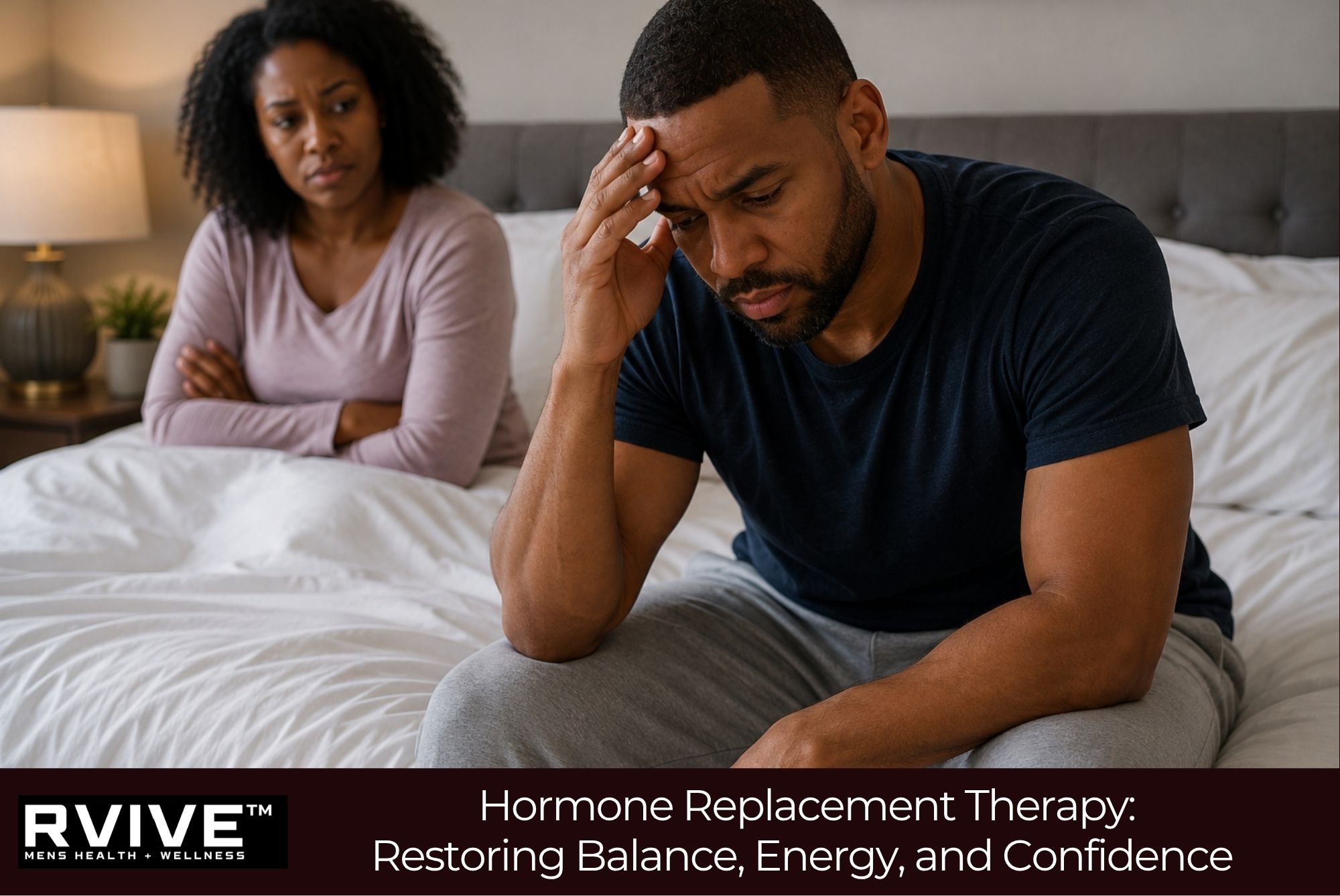
 Feeling persistently tired? Noticing a decline in drive, focus, or physical strength? For many men, these experiences are quietly written off as “just getting older” — but they are frequently the result of low testosterone, a highly treatable medical condition. At RVIVE Men’s Health in Rancho Cucamonga, California, we help men identify and address the underlying hormonal causes of these symptoms before they compound and affect quality of life.
Testosterone is the primary male sex hormone, responsible for regulating far more than sexual function. It plays a critical role in energy production, muscle maintenance, bone density, cognitive sharpness, mood regulation, and metabolic health. When levels fall below the optimal range — a condition clinically referred to as hypogonadism or low-T — the effects can ripple across virtually every system in the body.
The challenge is that low testosterone symptoms often develop gradually, making them easy to overlook or attribute to stress, poor sleep, or the natural aging process. Understanding the specific signs to watch for is the first step toward getting answers.
1. Persistent Fatigue That Sleep Does Not Resolve
One of the most frequently reported symptoms of low testosterone is a deep, pervasive fatigue that does not improve with rest. Men describe feeling physically drained and mentally sluggish regardless of how many hours they sleep. This is distinct from ordinary tiredness — it is a chronic lack of energy that affects daily functioning, motivation, and the ability to stay engaged throughout the day.
Testosterone plays a role in red blood cell production and mitochondrial energy generation, both of which contribute to how energized and alert you feel. When testosterone levels decline, so does the body’s capacity to sustain consistent energy output.
2. Reduced Sex Drive and Sexual Performance Issues
Testosterone is the primary hormonal driver of male libido. A noticeable and sustained decline in sexual desire — particularly one that feels out of character — is a hallmark indicator of low-T. This is often accompanied by difficulty achieving or maintaining erections, reduced sensitivity, and a general diminishment of sexual confidence.
While erectile dysfunction has multiple potential causes, hormonal insufficiency is among the most common and most correctable. Many men experience significant improvement in sexual health following testosterone restoration.
3. Loss of Muscle Mass and Increased Body Fat
Testosterone is anabolic — it supports the growth and maintenance of lean muscle tissue. When levels drop, men often notice that they are losing strength and muscle definition even if their exercise habits have not changed. At the same time, body fat tends to accumulate, particularly in the abdominal region.
This metabolic shift is not simply cosmetic. An increase in visceral fat — the fat stored around internal organs — is associated with elevated cardiovascular and metabolic risk. Restoring testosterone to an optimal range can support improved body composition and metabolic health when combined with appropriate lifestyle modifications.
4. Mood Changes, Irritability, and Depression
Low testosterone has a well-documented impact on mental and emotional health. Men with suboptimal testosterone levels frequently experience increased irritability, difficulty managing stress, a flattening of emotional affect, and a diminished sense of well-being. In some cases, clinically significant depression develops.
The connection between testosterone and mood is rooted in its influence on neurotransmitter activity, including dopamine and serotonin signaling. Men who have undergone testosterone replacement therapy often report a meaningful improvement in mood, motivation, and overall outlook — sometimes describing it as feeling like themselves again.
5. Cognitive Difficulties — Brain Fog and Poor Concentration
Testosterone receptors are present throughout the brain, including regions associated with memory, concentration, and executive function. Men with low-T commonly describe a cognitive cloudiness — an inability to focus, difficulty retaining information, slowed thinking, and reduced mental sharpness.
These cognitive symptoms can affect professional performance, personal relationships, and overall quality of life. While brain fog has many potential contributors, hormonal imbalance is frequently among the most overlooked.
6. Sleep Disturbances and Insomnia
Low testosterone and sleep disruption exist in a cyclical relationship: inadequate sleep suppresses testosterone production, and low testosterone can impair sleep quality. Men with low-T frequently experience difficulty falling asleep, staying asleep, or achieving restorative deep sleep — and may also have an increased susceptibility to sleep apnea.
Poor sleep amplifies virtually every other symptom on this list, creating a compounding effect that accelerates physical and cognitive decline. Addressing the hormonal component of sleep disruption is an important part of restoring overall health.
7. Reduced Bone Density and Joint Discomfort
Testosterone contributes to bone mineral density and joint health. Men with chronically low levels are at increased risk for osteopenia and osteoporosis — conditions more commonly associated with women but equally serious in men. Joint aches, reduced flexibility, and a greater susceptibility to fractures may all be downstream effects of prolonged testosterone deficiency.
What to Do If You Recognize These Symptoms
The presence of one or more of these symptoms does not automatically confirm low testosterone, but it is a clear signal worth investigating. Diagnosis requires a comprehensive evaluation that includes thorough bloodwork and a clinical assessment of your full hormonal picture — not just a single testosterone number.
At RVIVE Men’s Health in Rancho Cucamonga, CA, Dr. Rommie F. Fakhoury and our clinical team provide individualized testing and evaluation designed to identify the root cause of your symptoms. With more than 20 years of medical experience and a patient-first philosophy, Dr. Rommie F. Fakhoury takes the time to understand your health history, your goals, and your concerns — then develops a treatment plan that is tailored specifically to you.
If you are experiencing symptoms that may be related to low testosterone, we encourage you to take the first step toward answers. Contact RVIVE Men’s Health at (840) 276-9673 or visit us at 8790 19th St, Rancho Cucamonga, CA 91701. You can also learn more about our services at rvivemenshealth.com.
Testosterone deficiency is not something you have to simply accept. With the right diagnosis and the right treatment approach, it is a condition that can be effectively managed — and for many men, the results are transformative.